The memory hierarchy is an organization of different types of memory based on their size and access time. The higher it is (lower level number), the faster but smaller.
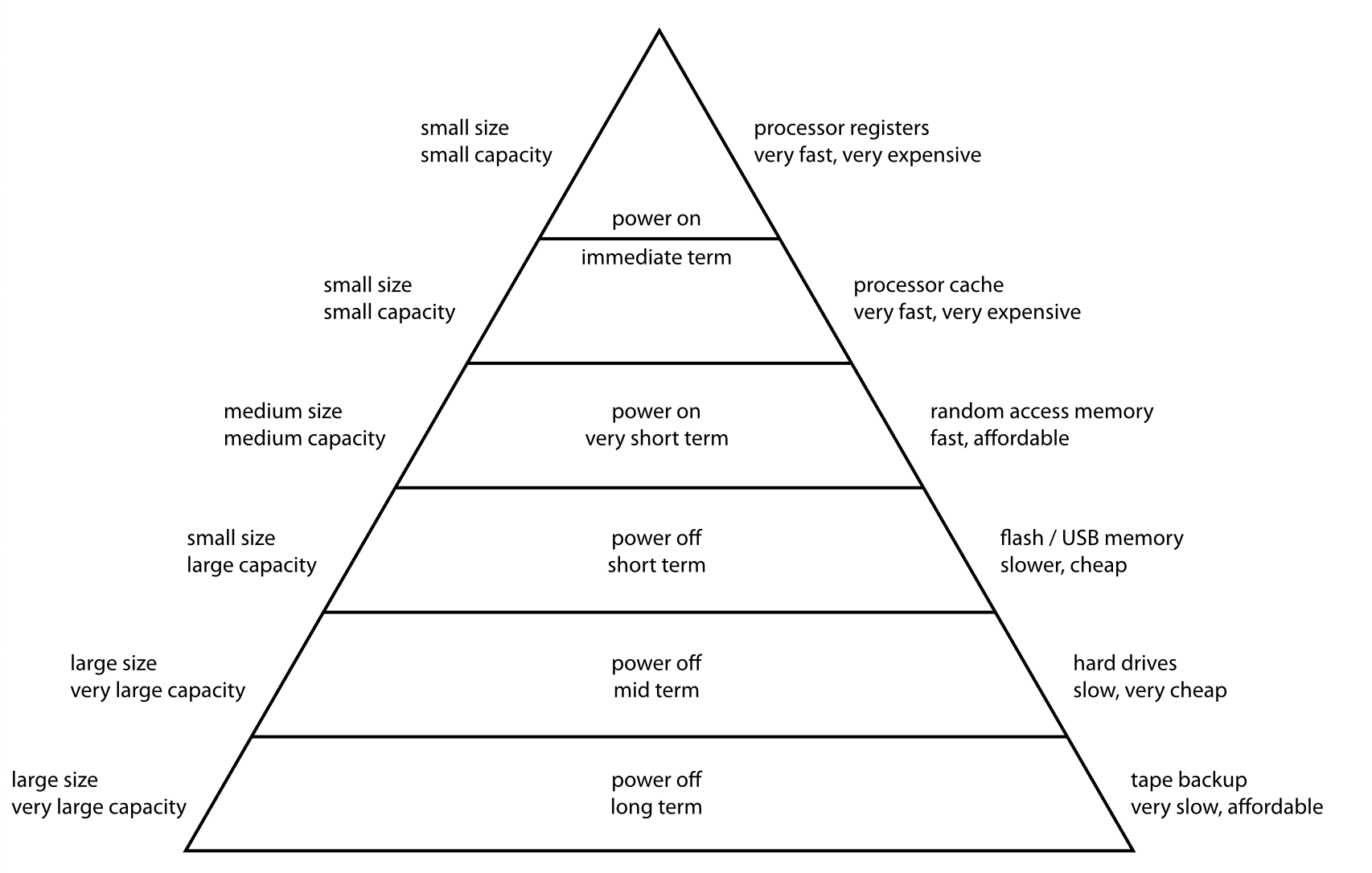
Generally, the closer the data is to the CPU, the faster the access time. We want to store commonly-used data in places with faster access time; to do so, we can take advantage of two principles:
- Temporal locality: if we access some part of memory, we'll likely access it again soon.
- Spatial locality: if we access some part of memory, we'll likely access its neighbors.
These ideas are used to optimize speeds in 🧠 Virtual Memory.